
Besides being incredibly loving, silly, social, and eager-to-please pets, pit bulls also have  extraordinary value in the workforce. It is perhaps these qualities, coupled with their intelligence, loyalty, athletic ability, stamina, and drive, that make pit bulls the ideal pick for specialized jobs that have a significant impact on our society. A few jobs that pit bulls excel at include:
1. Drug detection. Their ability to sniff out dangerous drugs makes pit bulls excellent police dogs. A pit bull named Popsicle (he was found in an old freezer where he was left to die after being used as bait for dog fights) has the largest recorded single drug find in Texas history – over 3,000 pounds of cocaine with a street value of nearly $1.4 million.
2. Explosive Detection. Some dogs have a talent for detecting explosives, which makes them perfect for military service. A pit bull called Sergeant Stubby, for example, has been called the most decorated war dog of World War I and the only dog to be nominated for rank and then promoted to sergeant through combat. Stubby served for 18 months and participated in 17 battles on the Western Front, where he was wounded in action twice, saved his entire platoon by warning them of a poison gas attack, found and comforted the wounded, and single-handedly captured a German soldier.
3. Search and rescue (SAR). Pit bulls Cheyenne, Dakota, and Tahoe are top-rated SAR dogs. The dogs have helped save the lives of many people over the years. They are so good, in fact, that Dakota and her owner Kris Crawford were requested by NASA to assist in the recovery of astronauts after the Space Shuttle Columbia disaster in 2003. Kris and her dogs were even awarded the President’s Volunteer Service Award in recognition of their valuable contributions to the community for over a decade.
4. Therapy/emotional support. Pit bulls’ gentle, affectionate nature make them wonderful therapy dogs, and are frequently used to help veterans who have been diagnosed with PTSD as well as people with other mental or physical illnesses. Check out therapy dogs Zen and Blueberry.
 There are a number of organizations across the nation that are dedicated to training pit bulls for the workforce. Pits for Patriots for example, specializes in training qualified pit bulls from rescues and shelters in the Chicago area to work as service, therapy, skilled companion, and companion dogs for U.S. military veterans and first responders. Animal Farm Foundation, whose mission is to secure equal treatment and opportunity for pit bulls, has formed a collaboration with Austin Pets Alive! and Universal K9 so that rescued and sheltered pit bulls can be selected and considered for detection dog work, which is traditionally reserved for purebred, purpose-bred dogs. It is because of efforts like these that pit bulls are able to prove themselves as treasured members of the modern workforce, fighting the stigma one dog at a time.
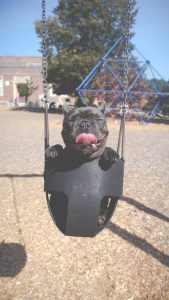 festivals, charity walks, meet-ups, and other celebrations during October. Even if you don’t own a pit bull, it’s a good opportunity to get out and meet some! Check your local shelter or rescue group for upcoming events.
 Even further, the bylaw also creates two categories of dogs of all breeds: at-risk and dangerous. At-risk dogs are those that exhibit aggressive behaviour, such as biting. Dangerous dogs are those that have killed someone or are deemed dangerous by an expert. If a dog is “deemed dangerous,” he/she will also be subject to seizure and euthanasia.
 Under the current law, “if the owner of an animal that is being held in custody (by a local governmental unit or other person, such as a humane society, on behalf of a local governmental unit) is convicted of a crime related to animal fighting and the animal is one year old or older or shows indication of having participated in fighting, the animal must be euthanized.” This law did not allow for any kind of behavioral analysis or rehabilitation for the animal in question; it was an immediate death sentence. Under Bill 487, however, “if an animal has been taken into custody because it is believed that the animal has been used in any crime against animals or that it constitutes evidence of a crime against animals, it must be retained in custody.” The bill also allows the local governmental unit or other person with custody of the animal in question to demand payment from the animal’s owner for the custody, care, and treatment of the animal every 14 days.